
Claims Intake Automation
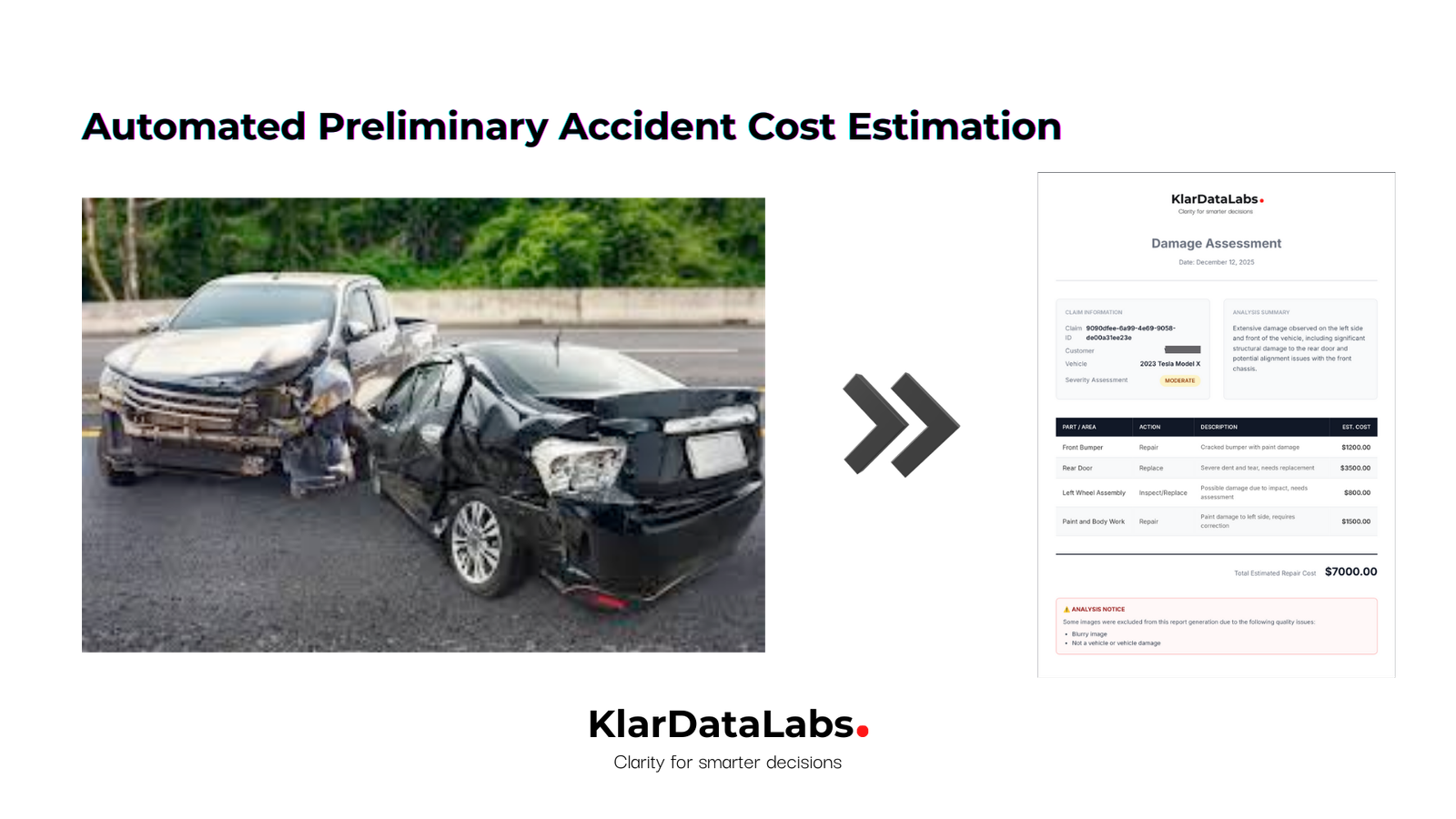
Automated Preliminary Accident Cost Estimation
The Business Problem (Why)
Claims processing is slowed by fragmented and manual intake methods. Claims arrive via email with inconsistent file names, variable photo quality, and unstructured information, leading to frequent rework and delays. Claims adjusters spend 60–80 minutes per claim on administrative handling rather than damage assessment, reducing productivity and increasing operational costs.
As a result, cycle times extend, SLAs are missed, and throughput metrics lack reliability, limiting management’s ability to forecast capacity and performance. At a volume of 200 claims per month, this inefficiency consumes approximately 200–270 hours of non-value-added effort. Manual handling also increases fatigue-related errors and introduces inconsistency in claim estimates depending on who processes the file.
For customers, these inefficiencies translate into longer response times and inconsistent outcomes, with decisions taking hours or days when they should take minutes, negatively impacting customer satisfaction and trust.
Social Proof
We recently deployed this for a team processing ~200 claims/month. Photos in, quotes out, with no human file handling. This pattern is standard in our Enterprise builds for high-volume, SLA-bound operations.
Benefits & KPIs (What you get)
The Bridge (Why a CEO cares)
Speed and reliability drive unit economics. Faster quotes lower cost-to-serve and improve conversion rates. Deterministic states and auditable trails safeguard SLAs, compliance, and customer trust.
This is not “AI magic”. It is engineered throughput with measurable, observable outcomes.
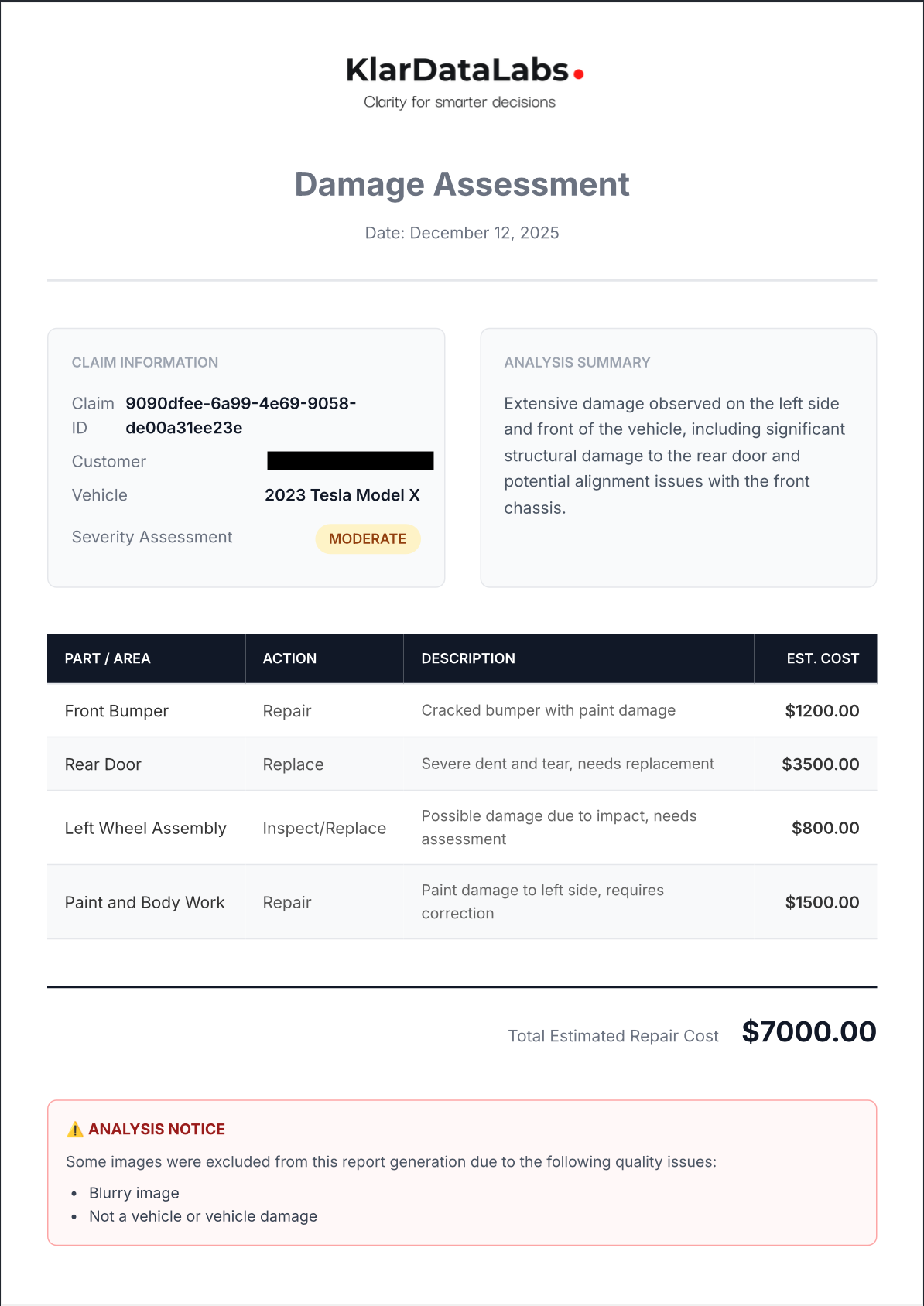
KlarDataLabs - Sample Damage Report
Next Steps & Enterprise Scale (Future)
Qualification: Designed for teams processing 100–5,000+ claims/month with SLA and audit requirements.